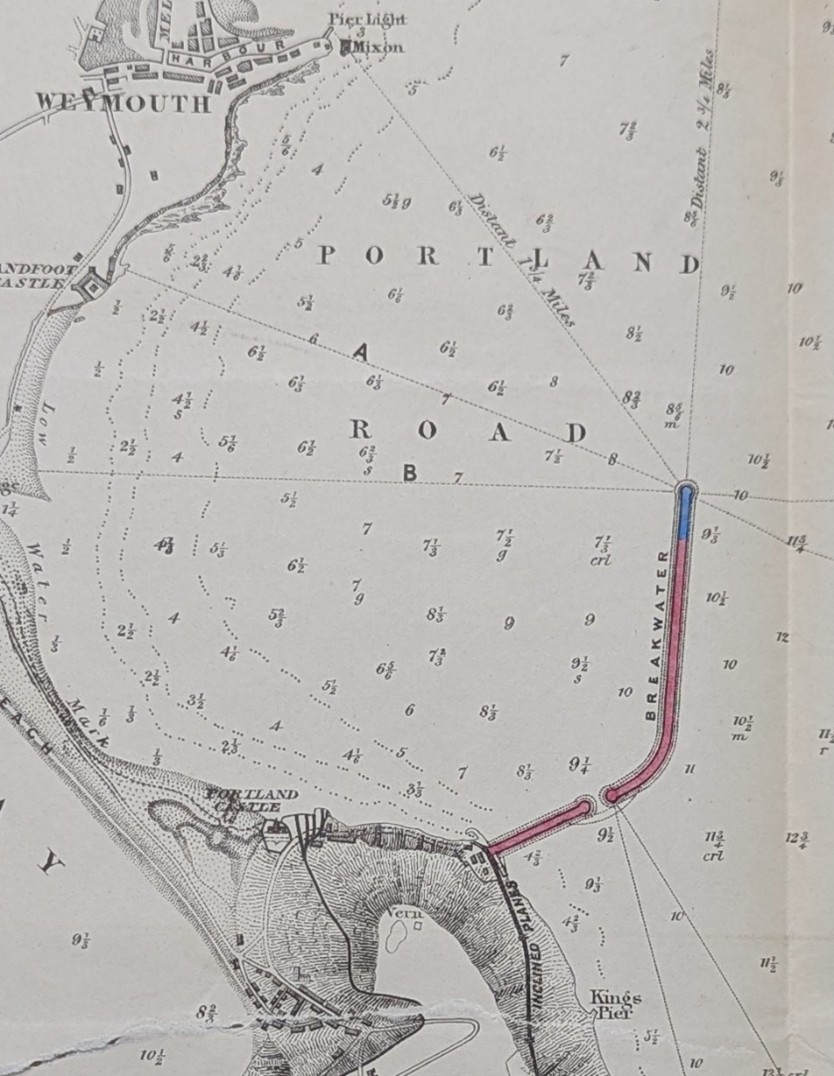
The great stone breakwater was built using blocks quarried on Portland by convict labour. A wooden framework was laid out along the planned route, with railway tracks running along the top. Stone was tipped from wagons into the sea until it rose above the waterline, then left for around two years to consolidate under the action of the waves before being completed.
The project took 22 years to finish and cost double the original budget, but it was widely regarded as a success. During severe storms, more than 130 ships could be sheltering in the harbour at any one time.
By 1895, however, most merchant ships were larger and steam‑powered, making them less dependent on sheltered anchorages. As a result, Portland Harbour became less important as a refuge for commercial shipping but increasingly significant as a Royal Navy base. This growing military importance brought new dangers.
The invention of torpedoes, which could be launched from submarines or fast motor torpedo boats, meant that enemy vessels could potentially slip into the harbour and attack ships at anchor.
To counter this threat, the Admiralty decided to fully enclose the harbour by building additional breakwater arms, a process that would take eight years.
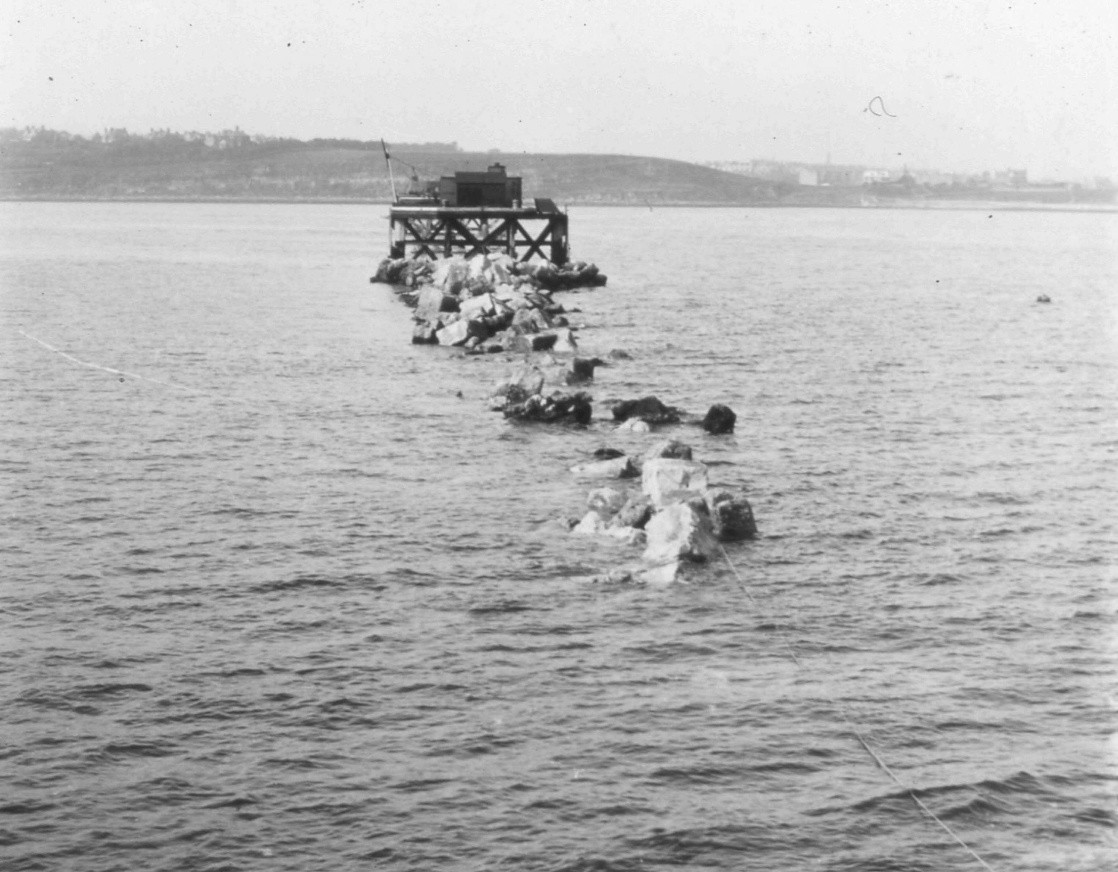
As a temporary measure, a series of 12 wooden gun‑equipped platforms known as “Dolphins” was constructed along the line of the new breakwater. Boom nets were strung between them to prevent enemy craft from entering the harbour.
New Breakwater Arms emerge from the sea.
These measures worked in combination with the permanent fortifications visible from this window: Nothe Fort, the East Weare Batteries, the Verne, and Breakwater Fort, forming a co-ordinated defensive system designed to protect one of Britain’s most important naval anchorages.